
In the digital world, information travels across many systems. To keep it consistent, safe, and readable, data often needs to be encoded.
One of the most reliable methods for this is Base64 encoding.
A string like qkfzzu1lbnvinhp4dlhz may seem random. Yet, when decoded, it becomes “apple-iphone-16-pro-max-new-color.”
This example shows how Base64 hides information while keeping it accessible.
Let’s explore what Base64 is, how it works, and why it matters.
What Is Base64 Encoding?
Base64 is a method to convert binary data into text format.
It allows computers and systems that only read text to handle complex data like images, files, and special characters.
For instance, if you try to send a file that contains raw binary data through an email, it might break.
Base64 prevents that problem by converting the data into text characters that can safely travel anywhere.
A Simple Definition
Base64 is an encoding scheme that represents data using 64 printable ASCII characters.
These characters include A–Z, a–z, 0–9, +, and /.
When you encode data using Base64, you turn unreadable binary code into a string of readable letters and numbers.
Example:
The word “apple” becomes a new text string when encoded, yet it can easily be decoded back to its original form.
Why Base64 Exists
Different systems interpret binary data in different ways.
When data moves between platforms, errors can occur if the binary information is not standardized.
Base64 solves this by converting binary into text.
This ensures smooth transfer and perfect data integrity across all environments — from emails to web APIs.
Understanding qkfzzu1lbnvinhp4dlhz
The string qkfzzu1lbnvinhp4dlhz looks meaningless.
But when decoded, it reveals “apple-iphone-16-pro-max-new-color.”
This example shows how Base64 can hide readable data.
Companies use this technique to label, transfer, or store data discreetly without revealing details publicly.
Breaking Down the Process
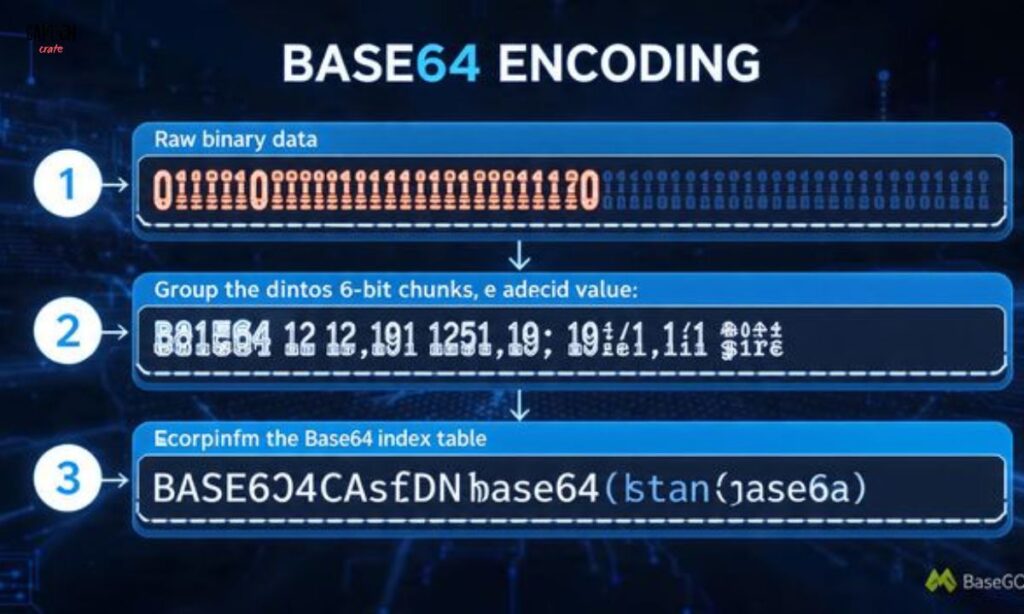
Encoding Steps:
- Convert text into binary form.
- Split binary data into 6-bit chunks.
- Map each chunk to a Base64 character.
- Combine them into a final encoded string.
Decoding Steps:
- Take the Base64 string.
- Reverse the mapping back to binary.
- Convert binary back into readable text.
Result: You get the original data again.
Why Encode Product Names?
Businesses use encoding to hide product details and keep systems efficient.
Here’s why encoding product names like “apple-iphone-16-pro-max-new-color” makes sense:
- Data security: Makes information less obvious to competitors.
- System compatibility: Works well with databases and APIs.
- Cleaner records: Avoids special character errors in storage systems.
- Professional presentation: Keeps URLs and logs neat.
The Role of Base64 in Everyday Technology
Base64 is everywhere — even if you don’t notice it.
Let’s look at how it helps in different fields.
1. Email Transmission
Emails were built for text only.
When you attach images or documents, Base64 converts them into text format so they can travel safely through email servers.
2. Web Development
Developers embed Base64 images directly into web code.
This reduces extra file requests and speeds up web pages.
Example:
<img src=”data:image/png;base64,iVBORw0KGgoAAAANSUhEUgAA…” />
3. Databases and Logs
Databases often fail to store special symbols or non-text data.
Base64 encoding allows any type of data to be stored safely as plain text.
It prevents corruption and makes system logs easier to manage.
4. APIs and Data Transfer
APIs need a consistent format when exchanging data.
Base64 helps encode tokens, keys, or files so they move across different systems without alteration.
Why Businesses Use Encoded Identifiers
Many companies use encoded identifiers for organization and protection.
| Reason | Description |
| Security | Hides sensitive product info or system data. |
| Uniqueness | Generates unique identifiers for tracking. |
| Efficiency | Simplifies database operations. |
| Privacy | Keeps internal data private from users. |
For instance, a company might encode product IDs to prevent easy data scraping by competitors.
How to Decode and Encode Base64
There are two main ways to use Base64 — through online tools or programming languages.
Online Tools
Many free websites allow quick encoding and decoding.
You simply paste your text, click a button, and get instant results.
Programming Languages
Most languages include built-in libraries for Base64.
Python Example:
import base64
text = “apple-iphone-16-pro-max-new-color”
encoded = base64.b64encode(text.encode(‘utf-8’))
decoded = base64.b64decode(encoded).decode(‘utf-8’)
print(encoded, decoded)
JavaScript Example:
let text = “apple-iphone-16-pro-max-new-color”;
let encoded = btoa(text);
let decoded = atob(encoded);
console.log(encoded, decoded);
SEO Implications of Encoded Strings
Encoded strings do not directly improve SEO rankings.
However, they can help maintain clean and structured URLs.
For example:
www.example.com/product?qkfzzu1lbnvinhp4dlhz
This hides product details while keeping the link unique and trackable.
It also prevents competitors from easily identifying or copying product data.
Security Considerations
It’s important to remember that Base64 is not encryption.
Anyone can decode a Base64 string using simple tools.
Use Base64 for data formatting and compatibility, not for confidential security.
For sensitive data, encryption methods like AES or RSA should be used instead.
Case Study: Apple and Hidden Identifiers
Apple often hides product identifiers in systems or databases before launch.
Encoded names appear in beta software or internal code before public announcements.
The string qkfzzu1lbnvinhp4dlhz fits this idea.
Decoded, it reveals “apple-iphone-16-pro-max-new-color.”
This approach helps Apple:
- Keep product details secret.
- Manage pre-launch testing.
- Prevent early leaks.
- Maintain brand control.
Step-by-Step Guide to Using Base64
Follow these steps to start using Base64 efficiently:
Step 1: Identify the Data
Choose what you want to encode — text, file names, or small files.
Step 2: Choose a Tool or Language
Use an online Base64 encoder or a programming library.
Step 3: Encode the Data
Run the command or paste your data to get the Base64 string.
Step 4: Store or Transfer
Use the encoded string in URLs, emails, or APIs.
Step 5: Decode When Needed
Decode it back whenever you need the original form.
Benefits of Base64 Encoding
- Works across all systems and platforms.
- Easy to implement with minimal setup.
- Prevents data corruption in transfer.
- Keeps identifiers short and readable.
- Integrates smoothly with APIs and databases.
Limitations of Base64
While Base64 is useful, it has a few drawbacks:
- Increases file size by about 33%.
- Offers no real encryption or privacy.
- Not suitable for very large files.
- Can be easily decoded by anyone.
Practical Applications Beyond Technology
Base64 is not limited to developers.
It’s widely used across industries.
E-Commerce
Online stores use encoded product IDs in URLs.
It keeps links clean and prevents data leaks.
Healthcare
Hospitals use encoding to transmit patient records safely between systems.
Marketing
Marketers use encoded tags in campaign links to track performance without exposing sensitive details.
FAQs
What does Base64 mean?
Base64 is a method to convert data into a text format using 64 characters.
Can Base64 be reversed?
Yes, it’s fully reversible using any Base64 decoder.
Is Base64 secure?
No, it only hides data; it doesn’t encrypt or protect it.
Why do developers use Base64?
They use it to safely transmit data between systems that only support text.
What is qkfzzu1lbnvinhp4dlhz?
It’s a Base64 string that decodes to “apple-iphone-16-pro-max-new-color.”
Conclusion
Base64 encoding plays a vital role in digital communication.
It helps systems share data safely and efficiently.
The example qkfzzu1lbnvinhp4dlhz shows how encoded strings can represent real information like “apple-iphone-16-pro-max-new-color.”
While Base64 is not a security tool, it ensures consistency and prevents data corruption in transfer.
From emails and APIs to marketing and e-commerce, Base64 keeps modern systems connected and organized.
Every time you see a long, mysterious code, remember — there’s meaningful data hidden inside.


